The online presence is no longer a luxury in the digital-first business world, and a good and well-organized presence is a must. Customers demand that businesses be available online, and your webpage may be the first place people see your brand. This renders Web Development one of the most vital investments a company can make for its long-term success and growth.
An information-based site is not created by a professional, nor does it present itself as information only. It can be used as an effective marketing weapon, a lead generation machine, and an engagement tool with the customers. Regardless of whether you are thinking about Business Website Development or you are intending to venture into online services, your website has a direct impact on how customers perceive it and how it will lead to business results.
This is a complete guide that will take you through all that is required by businesses to know about web development: processes, technologies, comparisons, strategies, and best practices that can guarantee scalability and performance in the long run.
Why Web Development Is a Must-Have for Growing Businesses?
The basis of your online presence is web development. An effective webpage will help strengthen your brand, establish a trusting relationship with your audience, and a bad webpage will send potential clients away in just a few seconds. Companies that invest in Custom Web Development Services tend to perform better, attract more users, and enhance conversion rates.
Your site is a 24/7 online storefront where the clients can learn about your services, browse the services, and make their choices anytime they want. It is also connected to marketing tools, analytics tools, and customer relationship systems, and is therefore a key center of business activities.
Also, the current web development is user-centered, fast, and functional, which directly influences customer satisfaction. A quick-loading and user-friendly site will keep the consumer interested and can motivate them into action, whether this is to buy the product, to complete a form, or even to call your company.
Learning about the Website Development Process.
The Website Development Process is a process that makes sure that your site addresses and achieves the business objectives as well as the expectations of the users. Every phase is essential to the provision of a successful final product, and failure to follow all the phases may lead to performance problems or a bad user experience.
Planning and requirement analysis is the first step, and during this process, developers and other stakeholders determine the intent of the site, the audiences, and the functionalities to be included. This phase is the foundation for all that is going to come after. After understanding the requirements, designers develop wireframes and a visual layout that depicts the layout and user navigation of the site.
It is in development that the actual building occurs. Frontend developers work on the interface, and backend developers are concerned with server logic and databases. Once it is developed, testing is conducted to make sure that the website functions well on devices and browsers. Lastly, the site is released and constantly checked on to improve and update.
Frontend vs Backend Development.
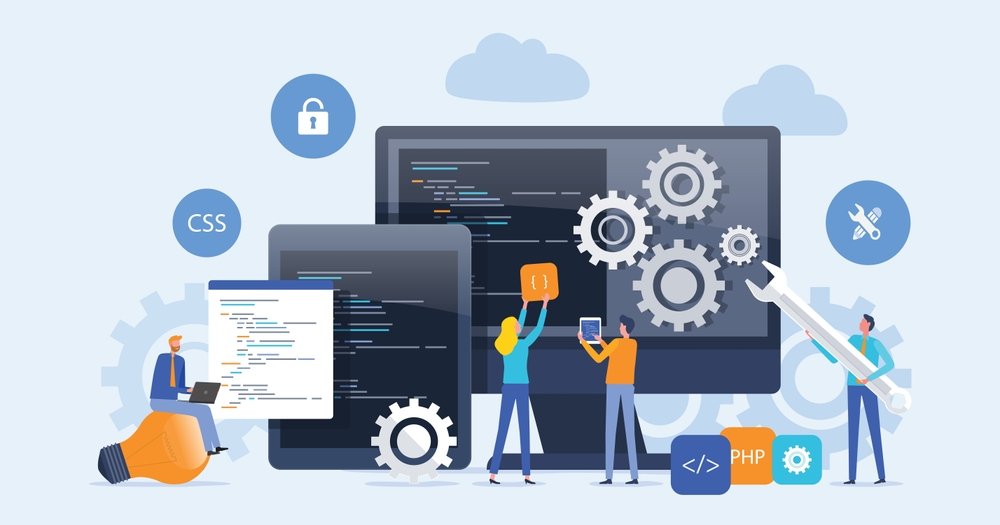
Frontend and Backend Development are two vital aspects that collaborate with each other to make a complete functional site. Whereas the frontend process is related to the appearance and interaction of the users, the backend process involves the processes that run behind the scenes to drive the website.
| Aspect | Frontend Development | Backend Development |
|---|---|---|
| User Interaction | Directly interacts with users | Works behind the scenes |
| Purpose | Design and user interface | Logic and data processing |
| Technologies | HTML, CSS, JavaScript | PHP, Python, Node.js |
| Performance Role | Visual responsiveness | Server efficiency |
| Complexity | Moderate | High |
The site needs the two to work together to create a successful site. When one side is weak, this may adversely affect performance, usability, and overall user satisfaction.
Responsive Website Design and Its Importance
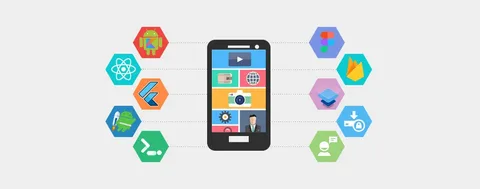
Responsive Website Design also makes sure that your site is responsive to various screen sizes and devices so that a user will experience the same experience regardless of whether they are using a smartphone, tablet, or a desktop computer. Responsiveness is no longer a choice, with mobile traffic taking up a large share of web traffic.
Responsive site automatically adapts itself to fit the size of the user’s screen of the user by automatically changing layouts, images, and navigation elements. This enhances readability, usability, and general involvement. It also saves time and maintenance expenses by not having to develop mobile versions of your site separately.
Mobile-friendly websites (a responsive design) are also essential to search engines, so it means that responsiveness can also be used to boost your search rankings. Responsive design helps businesses to gain greater visibility, retention of users, and an increase in the rate of conversion.
Custom Development vs template Solutions.
There are two ways in which a company can design a website: custom or template website development. Templates have a cheap and quick starting point, but often lack scalability and flexibility.
| Feature | Custom Development | Template-Based Solutions |
|---|---|---|
| Design | Fully customized | Pre-designed layouts |
| Flexibility | High | Limited |
| Performance | Optimized | May include extra code |
| Scalability | Easily scalable | Restricted |
| Cost | Higher upfront | Lower initial cost |
Custom Web Development Services: A tailor-made solution to your business that fulfills your business goals and is scalable for the future. Small projects might find templates handy, but those that are expanding their business are better served by platforms that are built to their specifications.
E-commerce Website Development
The development of e-commerce websites has been necessary for companies that need to market their products or services over the Internet. An effective e-commerce site will contribute to a better customer experience and boost sales through a smooth shopping process.
The current e-commerce websites should have the following features: a secure payment gateway, easy navigation, and an efficient inventory management system. The speed and reliability are very important because the slightest postponement of loading time can cost sales.
An effective e-commerce site is also connected to marketing, enabling business organizations to monitor the activities of customers, carry out targeted marketing campaigns, and enhance sales strategies. With the emphasis on usability and performance, companies can develop an online store that will attract and make customers purchase it again.
CMS Development Solutions
CMS Development Solutions enable companies to control the content on their websites without having to be techno-savvy. A content management system also makes it easier to keep your website relevant and interesting by simplifying the procedure of updating content (text, images, and pages).
This is particularly useful to businesses that frequently update their blogs, product listings, or new services. Teams are able to control content in-house rather than contracting developers to carry out all changes, and save time and money.
An efficient CMS also enhances efficiency in the operations of the workflow, as different users can cooperate in creating and updating the content. It gives version control, scheduling, and easy integration with other tools, making it a vital element in modern websites.
An overview of Web Development Technologies.
The selection of Appropriate Web Development Technologies is important in having a high-performing and scalable site. Different technologies are used to accomplish different goals, and the combination of technologies should be chosen to achieve the best outcomes.
| Category | Technologies |
|---|---|
| Frontend | React, Angular, Vue |
| Backend | Node.js, Python, PHP |
| Database | MySQL, MongoDB |
| Frameworks | Laravel, Django |
The contemporary technologies enable developers to develop more efficient, secure, and also quicker websites. It also guarantees that it is compatible with future upgrades and scalability needs.
Accessible Website Solutions
Accessible Website Solutions are necessary for businesses with growth and expansion plans over the long-term. A scaled-down site is able to support more traffic, extra functionality, and more data sizes without performance declines.
Scalability is one of the aspects that you need to introduce into your website early on, in order to avoid expensive redesigns later. It guarantees that your platform can expand together with your business, sustaining the new features and user requirements.
Scalability has a number of technical considerations, such as cloud hosting, modular architecture, and efficient database management. A concentration on these factors will enable businesses to develop a site that will be trustworthy and effective even after its expansion.
Best practices in website development.
Adherence to Website Development Best Practices will make your website more efficient and provide you with a good user experience. These practices are performance-based, user-friendly, and sustainable.
A well-designed site has well-organized and serviceable code that is simpler to upgrade and expand in the future. It also focuses on speed optimization, because a fast-loading website is easier to use and ranks better in search engines.
The other factor is accessibility. By making your site accessible to everyone, including the disabled, you will increase your audience and make it clear that you are an inclusive site. This is also achieved through regular testing and updating to make sure that your website is running and safe.
Performance Optimization Techniques
The optimization of performance is important in the user experience and in business. Slow websites are annoying and can escalate bounce rates and decrease conversions, so it should be a priority to make your websites as fast as possible.
There are various mechanisms of optimization of performance, which include compression of images, unneeded code, and caching mechanisms. These enhancements decrease loading time and improve efficiency.
The other strategy that can be used effectively is to employ content delivery networks so that the content of the websites is distributed among various servers to enable users in various locations to load faster. Businesses can keep their websites fast and reliable by constantly examining performance and making necessary changes to the site.
Web Development Security.
Security is another important aspect of web development. Ensuring the security of user data and averting cyber threats is crucial to preserving trust and ensuring business continuity.
The security features applied, e.g., the use of encryption (SSL), the use of secure authentication, and regular updates, can be used to prevent any vulnerabilities of your site. Businesses should also carry out routine security audits to determine possible threats and eliminate them.
Having a secure site keeps your sensitive information secure, as well as improves your brand image. When companies value their customers and their safety as well as privacy, they will have a greater likelihood of customers trusting them and becoming their clients.
User Interface and Experience.
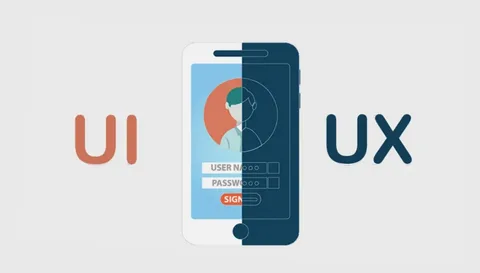
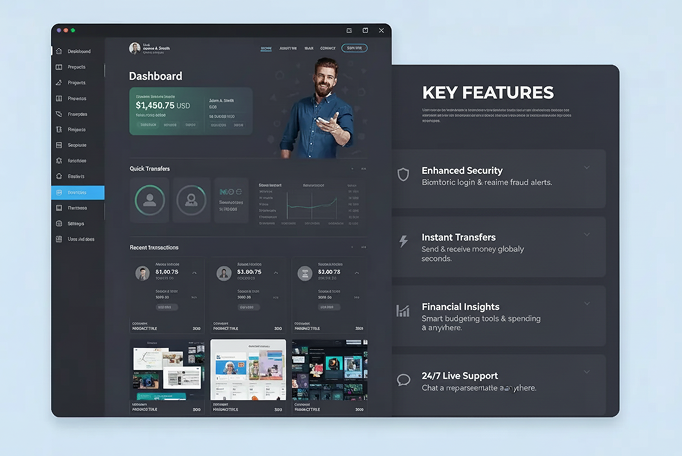
The interaction of the visitors with your site is determined by user experience and interface design. A properly designed interface enables users to navigate, locate information, and perform any other desired action easily.
Good design is concentrated on simplicity, clarity, and functionality. It makes sure that the users can grasp the layout of your website in a short period of time and retrieve valuable information without misunderstanding.
Colors, typography, and images are also visual elements that contribute to the creation of an engaging experience. Aesthetics coupled with usability help businesses to develop a website that is not only attractive but also functional.
Continuous Improvement and Maintenance.
Web development is not finished when a website has been launched. There has to be constant upkeep to make sure that the site is operational, secure, and up-to-date.
Frequently, the updates allow eliminating bugs, enhancing performance, and adding new features. User behavior and feedback can also be monitored, which makes the observations valuable and can be used to improve the site over time.
Maintenance is a continuous process that needs to be attended to and taken seriously. Companies that focus on constant improvement have a chance to keep up with the new technologies and demands of the users, which guarantees success in the long term.
Developed Business Growth Strategies.
In order to remain competitive, companies should not limit their web development to simple web development, but must embrace the use of sophisticated strategies that can boost performance and interactivity with users. These plans include adopting new technologies and using data-based knowledge.
One of the best methods is personalization, where the business can customize content and experiences according to its customers’ preferences. This will make the experience more interesting and topical to visitors.
Efficiency can also be enhanced through automation in terms of streamlining the processes of customer interactions and marketing campaigns. Also, analytics tools give valuable data that assists businesses in knowing how users behave and make good decisions.
With these new strategies, companies will be able to exploit the potential of their websites and attain improved performance.
Some of the mistakes to be avoided.
The most important thing in creating a successful website is to avoid pitfalls that occur in web development. A lot of businesses fail to consider essential elements that may adversely affect performance and end-user experience.
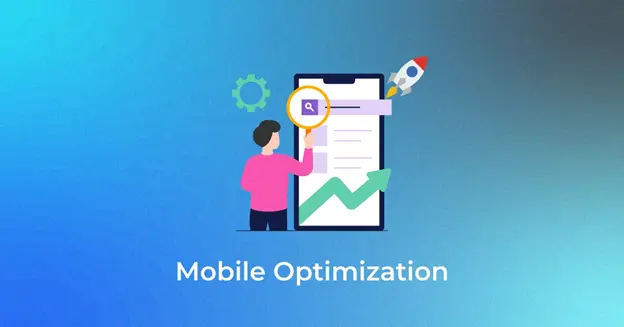
Overlooking the importance of mobile optimization is one of the errors that may lead to a subpar experience for a significant share of users. The second problem is that it may overload the site with irrelevant features that may slow down its performance, and the user may get confused.
Another significant issue is the absence of testing, which may cause bugs and other functionality problems post-launch. Security should also be a priority for businesses since failure to take care of it may open up the site to cyber threats.
Knowing these errors and taking the initiative, businesses will be able to develop a better and more trustworthy site.
Web Development Trends in the future.
Web development is an ever-changing technology, with the digital environment being influenced by new trends and technologies. Keeping abreast with such trends enables businesses to be competitive and provide improved user experiences.
New trends are the introduction of artificial intelligence, which will allow for a more personalized and intelligent interaction. Progressive Web Apps are also becoming popular, where browser apps are provided.
Voice search optimization is gaining relevance with the rise in the number of users who are using voice assistants. Moreover, developments in cybersecurity are assisting companies to secure their platforms in a better way.
With these trends, businesses will be able to be ahead of the pack and keep their websites relevant.
Conclusion
Web Development is an investment that is important to businesses that want to thrive in the digital environment. Business Website Development to E-commerce Website Development Solutions and CMS Development Solutions, all of which will help in establishing a powerful and efficient online presence.
The businesses will be able to develop scalable and high-performing websites by comprehending the Website Development Process, utilizing modern Web Development Technologies, and adhering to Website Development Best Practices. Investing in Responsive Website Design and Scalable Website Solutions guarantees future growth and flexibility.
Having a well-developed site not only increases user experience but also engages people, fosters trust, and helps in growing the business, so it is one of the most valuable resources of any organization.

We design scalable, user-focused websites aligned with your business goals and growth.
We build fast, secure, and fully customized web solutions tailored to your needs.
We create powerful online stores optimized for sales, performance, and seamless user experience.
We drive targeted traffic and conversions using data-driven digital marketing strategies.
Automate repetitive tasks, streamline workflows, and boost efficiency using smart AI solutions designed to save time, reduce costs, and improve business productivity.
Build scalable and high performing web applications tailored to your business needs with secure architecture, modern technologies, and seamless user experiences.
Create intuitive and visually engaging designs that enhance user experience, improve usability, and increase customer satisfaction across all digital platforms.
Improve your website visibility, rank higher on search engines, and attract qualified traffic with proven SEO strategies focused on long term growth.
Develop fast, secure, and fully customizable WordPress websites that align with your brand and deliver a seamless experience across all devices.
Design modern, responsive website interfaces that provide smooth navigation, engaging layouts, and optimized user journeys to increase conversions and retention.