Technological advancement has given rise to many innovations that have resulted in improved efficiency and productivity. One of the reasons people are moving towards advanced technology is to reap maximum benefit with little effort.
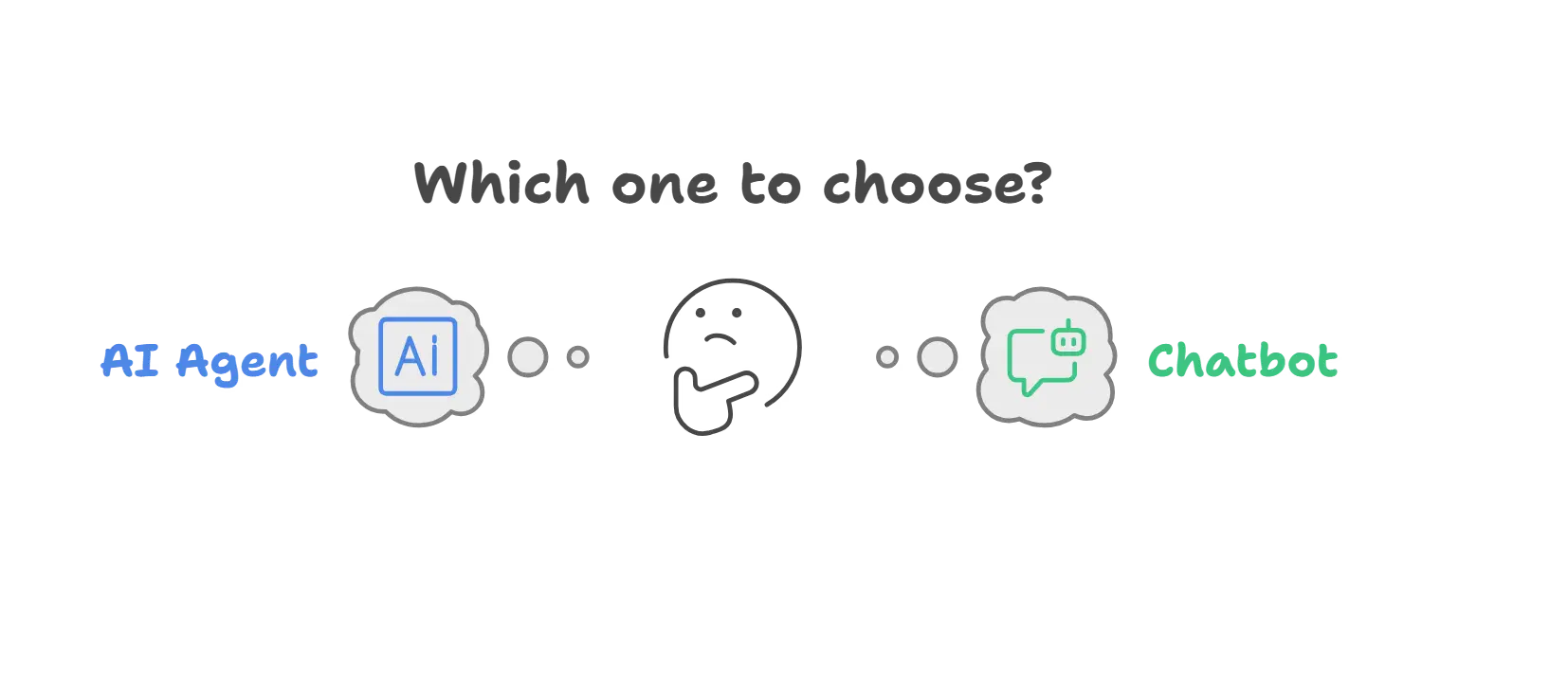
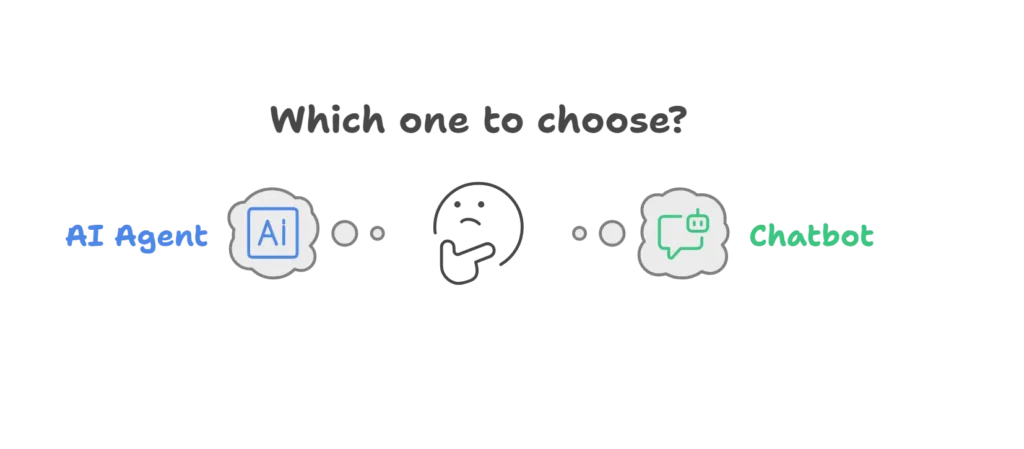
AI agents and chatbots have disrupted the overall service industry. Although they are used synonymously with each other, there is a lot of difference between them. In this post, we are going to discuss some of the differences between AI agents and chatbots. Let’s get started.
What is an AI Agent?
An AI Agent is a computer program that can act on its own to achieve goals by processing information, making decisions, and performing tasks. In simple terms, it’s like a digital assistant that doesn’t just wait for instructions. It can think, plan, and take action within its environment.
An example of an AI Agent can be understood as an autonomous financial agent that monitors transactions, identifies fraud, issues refunds, and notifies customers.
What is an AI Chatbot?
An AI chatbot is a computer program designed to simulate conversation with humans, usually through text or voice. It responds to user inputs by following predefined rules or using artificial intelligence to understand intent and provide relevant answers. In simple terms, a chatbot is a digital assistant that helps users interact with services, get information, or perform tasks without needing human support.
A customer support chatbot on an e‑commerce site that answers FAQs, tracks orders, and helps users return products. It only responds when asked and follows predefined scripts or NLP models.
Core Differences: AI Agents Vs Chatbots
Aspect | Chatbots | AI Agents |
Autonomy | Reactive, respond only when prompted | Proactive, can initiate actions independently |
Intelligence | Rule‑based or NLP‑driven | Contextual reasoning, planning, and decision‑making |
Memory | Limited, session‑based | Persistent, learns and adapts over time |
Scope of Tasks | FAQs, simple workflows, scripted support | Complex, multi‑step tasks across systems and tools |
Tool Usage | Minimal, often restricted to chat interface | Extensive — APIs, databases, external apps, code execution |
Adaptability | Fixed responses, limited personalization | Dynamic, adapts to user behavior and environment |
Cost & Complexity | Lower cost, easier to deploy | Higher investment, enterprise‑grade capabilities |
Use Cases | Customer support, lead generation, order tracking | Workflow automation, research, enterprise operations, personalization |
Capabilities of AI Chatbots
AI Chatbots are developed to stimulate real-time conversation and assist with structured and predictable tasks. The main benefit of AI chatbot si that it offers quick and accurate responses to users without muddling the conversation.
Customer support: AI Chatbots are helpful in handling FAQs, troubleshooting problems, and providing instant responses 24/7. It is the best way to offer timely support to customers, especially when it comes to the service industry and retail.
Lead generation: AI chatbots help generate leads by asking a set of questions, collecting contact details, and routing prospects to the sales team.
Order tracking: AI Chatbots also allow users to track their product delivery by checking the delivery status, shipping updates, and purchase history without any human intervention.
Appointment scheduling: AI Chatbots are helpful in automating the booking process for healthcare, business meetings, and salons.
E‑commerce assistance: AI Chatbots are not only ideal for offering assistance to customers, but also help in guiding shoppers, recommending products, and providing assistance.
Internal workflows: Support HR queries, IT troubleshooting, and employee onboarding with scripted flows.
Capabilities of AI Agents
AI agents go far beyond simple conversational support. They are autonomous, goal‑driven systems that can perceive, reason, and act across multiple tools and environments. The major benefits include adaptability, contextual understanding, and multi‑step execution.
Here are some of the key features of AI agents:
Autonomous decision‑making: AI Agents can analyze data, weigh options, and make independent choices aligned with business goals.
Multi‑step task execution: Unlike chatbots, they can complete complex workflows end‑to‑end, such as verifying transactions, issuing refunds, and notifying customers
Tool and API integration: Connect seamlessly with databases, CRMs, SaaS platforms, and external APIs to act across systems.
Contextual memory: Retain information across sessions, learn from user behavior, and adapt responses over time.
Adaptive learning: Improve performance by learning from feedback, patterns, and evolving datasets.
Personalized recommendations: Deliver tailored insights, product suggestions, or strategic advice based on user profiles.
Workflow automation: Streamline repetitive tasks like data entry, reporting, or scheduling with minimal human oversight.
Advantages of AI Agents vs Chatbots
Aspect | Chatbots | AI Agents |
Cost & Deployment | Low cost, quick setup, easy integration | Higher investment but scalable for enterprise needs |
Availability | 24/7 instant responses for FAQs and support | 24/7 autonomous operations across complex workflows |
Consistency | Provides uniform scripted answers | Delivers adaptive, context‑aware responses |
Ease of Use | Simple interface, minimal training required | Intuitive but requires infrastructure and planning |
Task Handling | Best for structured, repetitive tasks | Excels at multi‑step, dynamic, and complex tasks |
Personalization | Limited, rule‑based personalization | Deep personalization using contextual memory and learning |
Integration | Basic website/app integration | Advanced API, database, and tool integration |
Scalability | Scales for customer queries | Scales for enterprise automation and decision‑making |
Limitations of AI Agents vs Chatbots
Aspect | Chatbots | AI Agents |
Autonomy | Reactive only; cannot act independently | Risk of over‑automation if not properly managed |
Memory | Session‑based, forgets context after the conversation | Requires complex persistent memory systems, raising privacy concerns |
Complexity Handling | Struggles with unexpected queries or complex workflows | Can become too complex, requiring advanced infrastructure |
Cost & Resources | Low cost but limited scalability | Higher cost, longer deployment, and resource‑intensive |
Adaptability | Fixed responses, limited personalization | Needs continuous training and monitoring to stay effective |
User Experience Risks | Can frustrate users if over‑promised | May overwhelm users with too much autonomy or decision‑making |
Integration | Limited to basic website/app functions | Requires deep integration with APIs, databases, and enterprise systems |
Governance | Easy to manage but limited in scope | Needs strong governance for ethics, compliance, and accountability |
Summing Up
While chatbots provide cost‑effective, reliable solutions for handling structured conversations and repetitive tasks, AI agents represent the next leap forward with autonomy, contextual memory, and the ability to execute complex workflows across multiple systems.
Chatbots excel at delivering quick, consistent support, but their limitations in adaptability and independence make them best suited for simple use cases.
AI agents, on the other hand, unlock advanced automation, personalization, and decision‑making, though they require greater investment and governance.

We drive targeted traffic and conversions using data-driven digital marketing strategies.
We design scalable, user-focused websites aligned with your business goals and growth.
We build fast, secure, and fully customized web solutions tailored to your needs.
Develop fast, secure, and fully customizable WordPress websites that align with your brand and deliver a seamless experience across all devices.