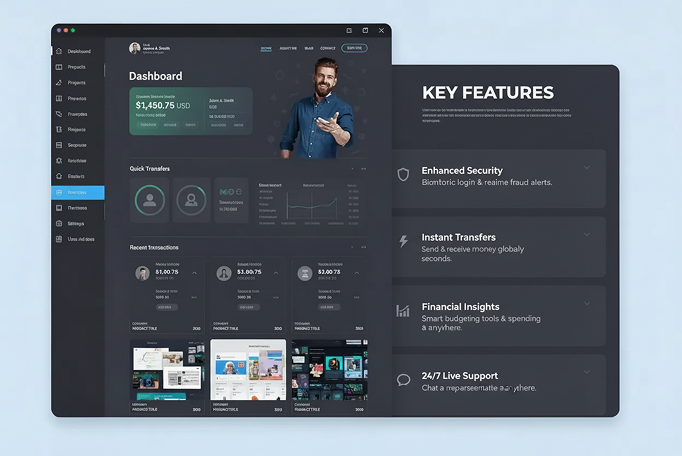
A mobile application is the most handy way to reach out to customers. From sending notifications to offering personalized products and services, mobile apps are built to make an impact in the form of building relationships, increasing sales, and streamlining operations. It ultimately leads to business growth, recurring sales, and loyal customers.
However, not every mobile app is good enough to gain traction, and some might use it for under a minute and then uninstall it. The problem is with the user interface, user experience, security, performance, and seamless integration. Missing those in a mobile app can cause loss of revenue.
If you are a business owner and planning to launch a new mobile app or need to revamp your existing one, make sure to read the post carefully. We will discuss some of the features you should not miss out on in any way. Let’s get started.
User-Friendly and Intuitive Interface
When it comes to a mobile app, the first impression is always going to be a key player. When a user opens your mobile app, the first thing they should get is an understanding of how to navigate and find what they need.
A clean and intuitive interface means less frustration, more time to engage, and most importantly, taking action. Here’s what a user-friendly and intuitive interface actually consists of:
- Simple and consistent navigation
- Clear calls to action
- Readable typography
- Easy-to-understand icons
- Consistent branding
- Mobile-friendly layouts
The more you focus on making a clean, intuitive, and engaging app, the more the chances of conversions, retention, and engagement.
Fast Loading and High Performance
A slow app means an increasing bounce rate and losing a huge chunk of people who showed interest in installing your app. Similar to website speed that matters a lot in engaging and retaining customers, a fast-loading app is a must.
When users open the app, they expect the app to load pages quickly, including pages, products, and other content. A slight delay can lead to frustration and abandon the app immediately.
Here are some of the things that must be done to optimize the app for quick loading:
- Load quickly
- Respond smoothly to user actions
- Minimize crashes
- Use device resources efficiently
- Work reliably on different devices and network conditions
When developing a mobile app, performance should be a top priority from the beginning rather than fixing it afterwards. A fast and reliable app creates a more positive customer experience and helps reduce user abandonment.
Strong Security and Data Protection
Customers provide sensitive information that needs to be protected by business owners. Failing to do so might result in hefty lawsuits. Security of a mobile app is not optional but a necessity. Make sure that your mobile app can handle all the sensitive information, such as name, email, password, location, and payment details. Some of the most important features include:
- Secure user authentication
- Data encryption
- Secure payment processing
- Protected APIs
- Regular security testing
- Appropriate access controls
- Secure storage of sensitive information
Easy Registration and Login
Mobile apps, especially those that are largely based on selling the products, need to provide seamless registration. Offer a straightforward registration process and collect only information that is genuinely necessary.
Depending on your business model, useful options may include:
- Email and password login
- Phone-number authentication
- Social sign-in
- Biometric authentication
- Password recovery
Some users might not be comfortable registering on your app. The simple way to deal with these users is to allow them to try a guest account for a limited time. It will help them to explore the app and know whether they want to keep it or not.
Personalized User Experience
The digital age is all about personalization, whether it be on a website or a mobile app, based on interests and personal preferences. Personalization allows a mobile app to display products and services based on user behavior and preferences.
For instance, an eCommerce app recommending products based on past interest, purchases, and search behavior will result in more conversions. Some of the important aspects of personalization include:
- Personalized recommendations
- Customized content
- Relevant promotions
- Saved preferences
- Location-based experiences
- Personalized dashboards
Remember, personalization should always respect privacy, transparency, and allow full control to the app user. Relevant experiences are helpful in increasing engagement and creating opportunities for customer retention.
Push Notifications
The push notifications feature on a mobile app works very well for businesses to communicate directly with users. One of the benefits of push notifications is to remind customers about abandoned carts, inform them about new promos and deals, provide order updates, and provide them with any news or announcements about the business.
However, if the notifications are sent in excess, it would result in infuriating customers, which may lead to uninstallation or disabling notifications.
Effective push notifications should be:
- Relevant
- Timely
- Concise
- Personalized when appropriate
- Useful to the recipient
Well-designed notifications can bring customers back to your app and keep your brand connected to them.
Seamless Payment Integration
If your mobile app is used to sell products or services, you need to have a seamless payment experience. When checking out from the mobile app, the customer should understand the pricing model, can select their preferred payment method, and complete the transaction without any trouble. Depending on your market and business model, payment options may include:
- Credit and debit cards
- Digital wallets
- Bank-based payment methods
- In-app payment systems
- Other locally supported payment options
The payment process should also provide clear confirmation and transaction information. Businesses should make the checkout process easy and allow customers to have a smooth experience from starting until the end.
Search and Filtering
The mobile app should not be such that users need to struggle to find products. The powerful search function on a mobile app is quite handy, especially when it comes to e-commerce stores, content platforms, booking applications, and marketplaces.
Useful search features can include:
- Keyword search
- Auto-suggestions
- Filters
- Sorting options
- Recent searches
- Relevant search results
For instance, an online retail app should allow customers to apply filters by price, availability, size, category, or brand. Helping customers find products and information quickly leads to an enhanced experience and increased customer satisfaction.
Customer Support and Feedback
The mobile app isn’t always perfect. There might be some glitches or bugs that should be addressed when customers complain. Moreover, when it comes to online stores, these mobile apps should provide live chat, email support, an in-app help center, FAQs, and phone assistance. It’s also valuable to give users a way to provide feedback. For instance, you can collect:
- Ratings
- Reviews
- Feature requests
- Bug reports
- Customer satisfaction feedback
The information can help your business identify problems and prioritize future improvements.
Good support can improve customer confidence, while feedback gives you valuable insights into what users actually want.
Analytics and Performance Tracking
Building an app is only the beginning. Business owners need to understand how customers are using. The analytics should provide information such as:
- How many users open the app
- Which features receive the most engagement
- Where users leave the customer journey
- Which products or services generate interest
- How often users return
- Which marketing campaigns drive app activity
These insights allow businesses to make informed decisions rather than relying on assumptions. For instance, if analytics show that many users abandon the checkout process, you can identify the payment experience and test improvements.
Summing Up
The mobile app is not about how many features you offer. It is all about providing ease to the users, even if the features are way less than the competitors. For business owners, the key is to prioritize features based on customer needs, business objectives, and long-term scalability.
When these elements come together, your mobile application can become more than another digital channel. It can become a valuable tool for building stronger customer relationships and growing your business.

We drive targeted traffic and conversions using data-driven digital marketing strategies.
We design scalable, user-focused websites aligned with your business goals and growth.
We build fast, secure, and fully customized web solutions tailored to your needs.
Develop fast, secure, and fully customizable WordPress websites that align with your brand and deliver a seamless experience across all devices.