Digital marketing is all about visibility and showing up to potential customers. A lot of strategies are experimented with to show visibility on search engines. However, one of the main components of digital marketing cannot be ignored at any cost.
Search engine optimization (SEO) needs constant tweaks to set things in the right direction. In one of our posts, we discussed in detail what is SEO in digital marketing, where we comprehensively described the types of SEO to be taken care of.
In this post, we are going to shed some light on technical SEO, which is the core of any website’s performance. Let’s take a look at what is technical SEO and its main components.
What is Technical SEO?
Technical SEO is the practice of optimizing your website’s backend so that search engine crawlers can discover, crawl, interpret, and index your pages without any trouble.
It is about how well your website performs and functions. If your website is going through technical issues, even high-quality content and on-page seo won’t rank because search engines will struggle to find your website.
Why is Technical SEO Important?
Technical SEO is the core of any website’s crawlability, indexing, and getting found online. It makes sure that the search engines can crawl, understand, and index your website correctly. Even if the content is written well, the search results will not display the website on SERPs and even AI overview.
Technical SEO Checklist
Some of the essentials fo technical SEO include:
Crawling & Indexing
Crawling and indexing in technical SEO refers to the process by which search engines discover and evaluate your website’s content. Crawling is the act of search engine bots navigating through your website’s pages by following links, reading code, and analyzing the structure of the website.
A well-optimized website ensures that important pages are crawlable and indexable, determining whether your content can even appear in search results, making them the foundation of SEO visibility.
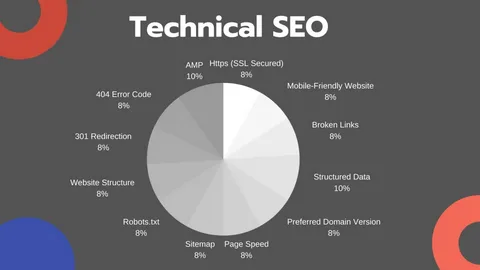
Robots.txt: A simple text file placed at the root of your website that tells search engine crawlers which pages or sections they are allowed (or not allowed) to crawl. It helps control crawler access, prevent indexing of duplicate or sensitive content, and manage crawl budget.
Sitemap.xml: It is an XML file that lists all the important URLs of your website, along with metadata like last update date and priority. It acts as a roadmap for search engines, making it easier for them to discover and index your content efficiently.
Indexability: In technical SEO, it refers to whether search engines can actually store and display your web pages in their search results after crawling them. Even if a crawler can access a page, it may not be indexed if it’s blocked by a noindex tag, canonicalized to another page, or considered duplicate or low-quality.
Canonicalization: It makes sure only one version of your site (HTTPS, www vs. non-www) is accessible.
Website Performance
Website performance is one of the core ranking factors, especially when it comes to speed. Here are some of the major elements of technical SEO that helps in improving website’s performance.
Core Web Vitals
These are Google’s key metrics for user experience.
- LCP (Largest Contentful Paint) measures how quickly the main content loads. A slow LCP means users wait too long to see the page.
- FID (First Input Delay) tracks how responsive your site is when users first interact.
- CLS (Cumulative Layout Shift) measures visual stability. Pages shouldn’t jump around as they load.
Optimizing these factors ensures fast, smooth, and user-friendly browsing for visitors.
Broken Links & Redirect Chains
Broken links (404 errors) frustrate users and waste crawl budget. Redirect chains hinder performance and affect link equity. Fixing these improves both user experience and SEO of the website.
Server Response Time: It is how quickly your server delivers content when requested. Long delays hurt rankings and user satisfaction. Using a CDN (Content Delivery Network) is the best way to deliver an optimal server response to users accessing the website from various parts of the world.
Mobile & User Experience
In today’s web ecosystem, search engines and humans look for the same things: safety, speed, and ease of use. When it comes to accessing websites, a majority of users access it from their mobile devices. Google does not allow webmasters to ruin user experience and take it seriously when ranking or de-ranking a website. Here are some of the important elements of mobile and user experience to improve when doing technical SEO.
Mobile Responsiveness: It means your website changes its layout, text size, and images to fit perfectly on any screen, whether it’s a desktop, a tablet, or a smartphone.
HTTPS Everywhere: HTTPS (Hypertext Transfer Protocol Secure) encrypts the data sent between a user’s browser and your website’s server. It prevents hackers from intruding on sensitive information like passwords, credit cards, or personal data.
Clean Navigation: Navigation is the roadmap of your website. A clean architecture means that a new visitor and search engine algorithm can both find what they are looking for effortlessly.
Structured Data & Metadata
Structured data and metadata serve as a signal between your website and search engine algorithms, transforming raw web content into clear, contextually understood data.
Schema Markup: Add structured data for products, articles, events, FAQs, etc. Validate with Google’s Rich Results Test.
Title Tags & Meta Descriptions: Ensure unique, keyword-rich titles and compelling meta descriptions to let search engines know what each page is all about.
Monitoring & Maintenance
In technical SEO, Monitoring & Maintenance is the ongoing process of auditing, diagnosing, and fixing the hidden issues of your website. The purpose is to make sure it remains healthy, secure, and easily crawlable by search engines.
Log File Analysis: Review server logs to see how search engines crawl your site.
Quarterly Audits: Re-run checks every 3 months to catch new issues
Search Console & Bing Webmaster Tools: Monitor crawl errors, indexing issues, and performance reports
Summing Up
Technical SEO is not just a set it and forget it process, but an ongoing process that needs to be fixed from time to time. No matter how good your content is and how well you have optimized it, if you have not checked all of the technical SEO parts, there is no way it can be ranked or shown up on SERPs.
If you are unaware of how to take care of a website’s SEO and technical aspects, Phoenix Coderex LLC has got you covered. From submitting your website on Google Search Console to optimizing, securing, and making it mobile responsive, our team has got you covered. Get in touch with us now to discuss your requirements.

We drive targeted traffic and conversions using data-driven digital marketing strategies.
We design scalable, user-focused websites aligned with your business goals and growth.
We build fast, secure, and fully customized web solutions tailored to your needs.
Develop fast, secure, and fully customizable WordPress websites that align with your brand and deliver a seamless experience across all devices.