
Technology has changed how businesses operate, manage, and organize their workflows. Especially when it comes to service businesses and retail, handling customer queries promptly is the key to success.
The evolution in technology has made the process for businesses and retailers to deal with customer queries without any delays. AI chatbots can answer queries, assist customers, and provide a solution within a few seconds. Moreover, the personalized recommendations and suggestions further enhance their functionality and improve the customer experience.
AI chatbots are the next disruptor in the service business to handle support. Businesses that have not yet adopted the technology need to clarify what it is and how to leverage it for their use.
In this post, we are going to discuss everything about what AI chatbots are, types of chatbots, uses, benefits, and much more. Stay tuned, and let’s get started.
What are AI Chatbots?
AI chatbots are digital assistants that interact with users through natural language. Unlike simple scripted bots, they interpret intent, track context, and generate dynamic responses.
For instance, a person is shopping for a specific dress that suits not only the current weather, but also the style, size, and color. A successfully integrated AI chatbot on an online store will provide suggestions and give the
A shopper needs an order update. An employee requires access to an app. Both expect fast, accurate answers without waiting in a queue. They expect 24/7 customer service due to the presence of AI.
Today’s chatbots and conversational AI are becoming vital for customer service. In the next section, let’s take a look at the types of AI chatbots.
Types of AI Chatbots
Not all AI chatbots are created equal. Here are some of the types of AI chatbots.
Rule-based chatbots
- Operate on predefined scripts and decision trees.
- Best for FAQs, order tracking, and simple tasks.
- Limited flexibility and cannot handle complex queries.
- E-commerce sites for FAQs (order status, returns)
- Restaurants for menu inquiries and reservations.
- Small businesses needing simple customer support.
NLP-powered chatbots
- Use natural language processing to interpret user intent.
- Can understand varied phrasing and provide contextual answers.
- Suitable for customer support and service industries.
- Banks and financial institutions for customer queries.
- Telecom companies for troubleshooting and billing support.
- Healthcare providers for appointment booking and patient FAQs.
Generative AI chatbots
- Powered by large language models (LLMs).
- Generate dynamic, human-like responses in real time.
- Ideal for open-ended conversations and personalized assistance.
- E-commerce companies for advanced customer support
- Online education platforms for tutoring and Q&A.
- Retail/e-commerce for personalized shopping assistants.
Voice chatbots
- Process spoken language and respond verbally.
- Used in smart devices, call centers, and IVR systems.
- Enable hands-free interaction.
- Call centers for automated phone support.
- Smart home device companies (Amazon Alexa, Google Assistant).
- Travel agencies for booking via phone interactions
Hybrid chatbots
- Combine rule-based flows with AI-powered flexibility.
- Balance reliability with adaptability.
- Popular in retail and service industries.
- Retail businesses combining scripted flows with AI flexibility.
- SaaS companies for onboarding and troubleshooting.
- Hospitality (hotels) for reservations and concierge services.
Consultative AI chatbots
- Act like digital advisors, guiding decisions.
- Provide product recommendations and upselling.
- Drive revenue through personalized engagement
- E-commerce platforms for product recommendations.
- Real estate firms for guiding property searches.
- Insurance companies for policy advice and upselling.
Contextual chatbots
- Track conversation history and adapt responses accordingly.
- Improve personalization and continuity in long-term interactions.
- Healthcare for ongoing patient support.
- Education platforms for tracking student progress.
- Enterprise businesses for internal workflow automation.
Core Features of AI Chatbots
Natural Language Understanding (NLU)
The AI chatbots are backed by a large language model. NLU allows chatbots to interpret diverse phrasing without training phrases. It makes conversation more natural and flexible.
Knowledge Base with RAG
Retrieval-Augmented Generation (RAG) ensures that responses are provided in real company data, allowing more accurate data and less procrastination.
Multilingual Support
These types of AI chatbots detect user language and give answers in 50 languages, including languages that are written from right to left, such as Persian, Arabic, and Urdu.
CRM and App Integrations
Integration with platforms like Salesforce, HubSpot, and Zendesk allows chatbots to personalize interactions by accessing customer history and data.
Analytics Dashboard
Provides insights into resolution rates, customer satisfaction (CSAT), and escalation reasons, helping businesses optimize chatbot performance.
Customizable Personality
Chatbots can be tailored to reflect brand tone and personality, ensuring consistent customer experiences aligned with brand identity.
Human Handover
Smooth escalation to human agents when needed, preventing frustration and ensuring complex issues are resolved effectively.
Security and Compliance
Features like data encryption, GDPR compliance, and role-based access protect sensitive customer information.
How Do Chatbots Work?
AI chatbots use predefined conversation flows, machine learning, and Natural Language Processing (NLP) to understand queries. They interpret what a user needs, match it to their intent, and respond in real time.
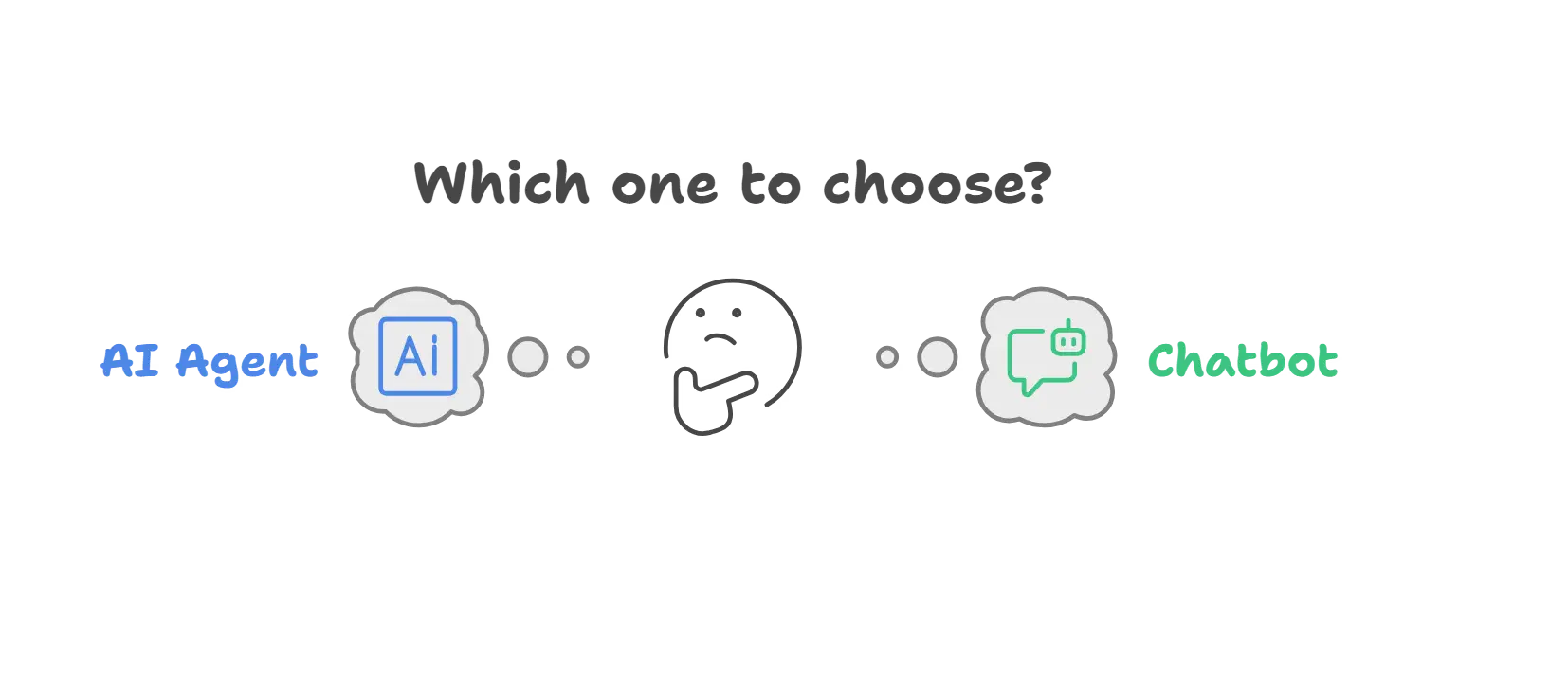
Businesses can leverage knowledge base chatbots to collect details, answer FAQs, redirect requests, and guide users through common queries. AI agents can also reason through complicated requests, ask follow-up questions, follow business procedures, and take action across systems.
When it comes to customer experience, chatbots can answer simple questions, summarize issues, and share articles. In addition, for employee experience, they can answer IT queries, guide service requests, and direct employees to internal resources.
AI agents further enhance the functionality. For instance, some AI agents can use actions, analytics, and quality assurance to solve problems end to end.
Benefits of AI Chatbots for Businesses
Businesses are leveraging AI chatbots more than ever. The reasons are quite obvious. They are the replacement for humans that can provide accurate data, answer queries, and make recommendations. Here are some of the benefits of AI chatbots for businesses.
24/7 Availability
When it comes to providing customer support, humans might not be available during certain hours of the day. However, customers can visit the store and make any inquiry without taking time into consideration. When it comes to AI chatbots, it offers round the clock support, ensuring that no queries are outside hours.
Cost Reduction
One of the benefits of using AI chatbots for businesses is that you can lower staffing costs. For instance, businesses can automate routine queries, reducing the need for large support teams.
Moreover, operational efficiency can be enhanced by streamlining repetitive tasks and focusing on more productive work. The initial investment pays off through sustained savings and scalability.
Quick Response Times
Businesses that deal directly with customers can immediately respond to customers rather than letting them wait in queues. AI chatbots help in reducing long hold times in call centers or delayed email responses. Moreover, by leveraging AI chatbots, improved customer satisfaction helps in building trust and keeping users engaged.
Enhance Customized Experience
AI chatbots enhance personalized customer experience by tailoring interactions to each individual. They can provide tailored recommendations based on purchase history or browsing behavior, ensuring customers see products or services that match their interests.
Omnichannel Engagement with AI
Omnichannel engagement with AI chatbots means businesses can interact with customers seamlessly across multiple platforms, websites, mobile apps, social media, and messaging services.
AI chatbots provide cross-platform support, ensuring that whether a customer reaches out via Facebook Messenger, WhatsApp, or a company’s website, they receive the same quality of service.
Scalability
AI chatbots are scalable, which means as your business grows, you don’t need to worry about your business’s expansion. Chatbots are scalable and can handle thousands of customer queries simultaneously, without increasing costs or human intervention.
They ensure consistent performance during traffic spikes such as seasonal sales or marketing campaigns. By automating repetitive tasks and adapting to higher workloads, AI chatbots deliver future-proof growth, allowing businesses to expand confidently while maintaining speed, reliability, and customer satisfaction.
Operational Efficiency
Operational efficiency with AI chatbots can help businesses to streamline processes, eliminate manual workload, and enhance productivity. Chatbots automate repetitive tasks, including appointment scheduling and FAQ handling, allowing employees to focus more on productive tasks.
By delivering consistent responses and reducing errors, chatbots improve service quality while lowering operational costs. They support internal efficiency in HR, IT help desks, and onboarding, making everyday processes faster and more reliable.
Future of AI Chatbots
The future of AI chatbots lies in their evolution from simple text-based assistants into intelligent, multimodal companions capable of handling voice, images, and video while delivering hyper-personalized experiences through advanced data analytics and generative AI. Businesses will increasingly rely on chatbots integrated with enterprise systems like CRMs and ERPs to automate workflows, while emotionally intelligent bots will enhance customer trust by detecting sentiment and responding empathetically.
Voice-enabled assistants will become mainstream, expanding accessibility and convenience, and stricter focus on security and compliance will ensure data privacy in regulated industries. Overall, AI chatbots are set to become strategic assets that drive customer engagement, operational efficiency, and digital transformation across industries.
Summing Up
To sum up, AI chatbots have rapidly evolved into powerful tools that transform customer engagement and business operations. They combine natural language understanding, personalization, and seamless integrations to deliver instant, scalable, and cost-effective support across industries.
While they bring clear benefits such as 24/7 availability, efficiency, and improved conversions, challenges like data privacy, ethical use, and maintaining human empathy remain critical. Looking ahead, the future of AI chatbots points toward multimodal capabilities, emotionally intelligent responses, and deeper enterprise integration, positioning them as strategic assets in digital transformation.

We drive targeted traffic and conversions using data-driven digital marketing strategies.
We design scalable, user-focused websites aligned with your business goals and growth.
We build fast, secure, and fully customized web solutions tailored to your needs.
Develop fast, secure, and fully customizable WordPress websites that align with your brand and deliver a seamless experience across all devices.