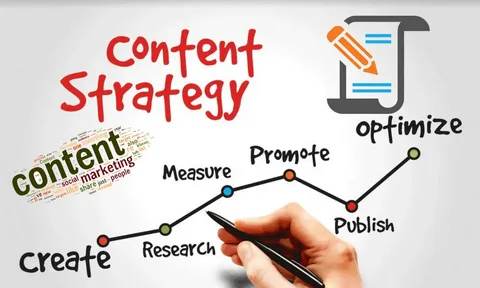
Content marketing is the core of any business operating online. With digital marketing evolving at a rapid pace, brands are struggling to find the right voice and platform to reach their target audience. A lot of them only try to apply the same old strategy that is to publish blog posts, social media updates, and videos without a clear plan, without seeing any results.
That is where a content marketing strategy comes into play to help you define a roadmap for deciding what to create, where to distribute, and how to measure its performance.
In this guide, we are going to reveal some of the ways to create a content marketing plan that works. Let’s get started.
What is Content Marketing Strategy?
Content marketing strategy is a plan that involves creating, distributing, and measuring content performance to support business long-term goals. Creating content only to add pages to your website isn’t going to work. It needs to be done through a proper strategy that aligns with the target audience and pushes them to take action.
For instance, a brand can develop a content marketing strategy for achieving different purposes like:
- Increase organic search traffic
- Generate qualified leads
- Build brand awareness
- Educate potential customers
- Establish industry expertise
- Nurture prospects through the buying journey
- Increase conversions and sales
Why Does Your Business Need a Content Marketing Strategy?
As a business owner, you need to develop a content marketing strategy to create awareness, achieve goals, and generate results. The main objective of a content marketing strategy is to help you focus on topics your customers care about, create content around specific goals, and target keywords that fulfill users’ intent. The primary goal is not to just create more content without purpose. But the goal is to create content that works to build connection, develop authority, and create awareness.
The goal isn’t simply to create more content. The goal is to create content that performs a specific job for your business and your audience.
How to Create a Content Marketing Strategy?
Creating a content marketing strategy involves several steps. Here are some of the ways to create a strategy.
Define Your Business Goals
Start by finding what you want to achieve from your content marketing efforts. Your goals should be connected to broader business objectives rather than vanity metrics such as publishing content on a large scale without seeing results.
For instance, your goals must include how many qualified leads do you want to increase organic traffic, and improve visibility for high-volume keywords. Reduce customer support questions through educational content. Use the SMART framework to make your goals specific, measurable, achievable, and relevant.
Identify Your Target Audience
Identify your target audience, who you are creating content for. The goal is to check whether the target audience is in the BoFU, ToFU, or MoFU stage. Depending on the situation, you need to understand their problems, goals, questions, and purchasing behavior.
Create audience profiles based on information such as industry, job role, pain points, buying triggers, and company size
For B2B brands, you may have a number of audiences involved in a purchase. Take an example of software company could create different content for marketing managers, operations managers, sales leaders, and technical decision-makers. The more you define your target audience, the better the results and a great content.
Understand the Customer Journey
The target audience is not known to your products or services. Some of them might be in the awareness stage, where they need to be fed information from scratch about the products and services. Others might be in the consideration stage, where they are just an inch away from buying the product/service.
Conduct Keyword Research
Keyword research allows businesses to understand what their target audience is searching online. The process starts by identifying broad topics related to products and services or customer pain points. A lot of marketers only focus on search volume. However, the most important factor is keyword intent, which has become even more important after the evolution of AI overviews.
Common types of search intent include informational, where users want to learn something, such as “What is content marketing?”; commercial investigation, where users research and compare solutions, such as “Best content marketing tools for businesses”; transactional, where users are ready to take action, such as “Content marketing agency pricing”; and navigational, where users are looking for a specific website or brand, such as “HubSpot content marketing.” Therefore, content should be created to satisfy the user’s intent behind a target keyword rather than simply repeating keywords throughout the page.
Analyze Your Competitors
Competitor research helps identify content opportunities that your business may have missed. Start by analyzing competitors that rank for your target keywords and examine the topics they cover, content formats, backlink-attracting articles, questions they answer, content gaps, quality and depth, calls to action, and internal linking structures.
Rather than copying competitors, focus on creating content that is more useful, current, specific, or actionable. For example, if competitors offer generic advice, your business can stand out by providing detailed guides, practical examples, templates, original data, expert insights, or step-by-step workflows.
Build Topic Clusters
Organize your content around broad topics that are closely related to your products, services, and audience needs. Create a comprehensive pillar page for a major topic and support it with more specific articles.
For instance, a digital marketing business can create a pillar page covering everything from keyword research to content creation, promotion, and content performance. The approach helps create a website structure and give readers additional resources to explore.
Choose the Right Content Formats
Different audiences consume content in different ways. Choose formats based on your audience’s preferences, search intent, and business goals. Some of the content formats include blog posts, how-to guides, case studies, videos, whitepapers and reports, infographics, product comparisons, and eBooks.
A complex topic may become easy to understand once the video is made according to the customers’ mindset.
Create a Content Calendar
A content calendar helps your business plan and organize its publishing schedule. It can include the target keyword, topic, content format, search intent, target audience, author, publication date, and promotion channels.
Instead of publishing content inconsistently, establish a realistic schedule that your team can maintain. Consistency is more valuable than producing a large amount of content that cannot be maintained over time.
Optimize Content for SEO
Creating valuable content is the priority, but optimizing it for search engines can help the right audience discover it. Use your primary keyword naturally in important areas such as the title, introduction, headings, URL, and relevant sections. Include related terms and answer questions that users commonly search for. Search-optimized content should read naturally and provide genuine value to the reader.
Create Content for Every Stage
Your audience may need different information depending on where they are in the buying process. At the awareness stage, create educational content that helps people understand their problems. At the consideration stage, provide comparisons, guides, case studies, and solution-focused content.
The decision stage involves creating product pages, pricing information, testimonials, demonstrations, and other content that helps prospects make an informed decision. A balanced content strategy should address multiple stages rather than focusing entirely on top-of-funnel traffic.
Promote Your Content
Publishing an article does not guarantee that people will find it. Promote valuable content through appropriate channels such as email marketing, social media, communities, partnerships, newsletters, and relevant industry websites.
You can also update and repurpose successful content into different formats. For example, a detailed blog post can become a series of social posts, an infographic, an email newsletter, or a video.
Add Relevant Calls to Action
Every piece of content should have a logical next step. Depending on the user’s intent, your call to action could encourage them to download a resource, subscribe to a newsletter, request a consultation, explore a product, contact your business, or read another relevant article.
The CTA should match the purpose of the content rather than interrupting the reader with an unrelated sales message.
Measure Content Marketing Performance
Track performance regularly to determine whether your content strategy is producing meaningful business results.
Important metrics can include organic traffic, keyword rankings, engagement, backlinks, leads, conversions, email sign-ups, and revenue influenced by content.
Do not evaluate content solely by page views. A smaller number of highly relevant visitors who become customers can be more valuable than a large amount of traffic with little business impact.
Update and Improve Existing Content
Content marketing is an ongoing process. Review older content regularly to identify outdated information, declining rankings, broken links, missing topics, or opportunities to provide more value.
Updating existing content with current information, better examples, additional sections, improved internal links, and stronger calls to action can help maintain its usefulness and search visibility.
Summing Up
Content marketing strategy is all about preparing yourself to become visible, be consistent, reach your target audience, and educate them without leaving them stranded. A good content marketing strategy can help you achieve goals without wasting resources, time, and effort.
Without understanding your core objective, writing and publishing content becomes irrelevant and a waste of time and resources.

We drive targeted traffic and conversions using data-driven digital marketing strategies.
We design scalable, user-focused websites aligned with your business goals and growth.
We build fast, secure, and fully customized web solutions tailored to your needs.
Develop fast, secure, and fully customizable WordPress websites that align with your brand and deliver a seamless experience across all devices.