
Digital marketing has become bread and butter for small businesses, emerging brands, and big enterprises. The competition to be visible, engage visitors, and convert them starts with placing the website at the top of search results.
The only way to rank your website at the top of Google search results is through Search Engine Optimization (SEO). What Search Engine Optimization is, how it works, and much more will be discussed in this post. Stay tuned, and let’s get started.
What is Search Engine Optimization (SEO) in Digital Marketing?
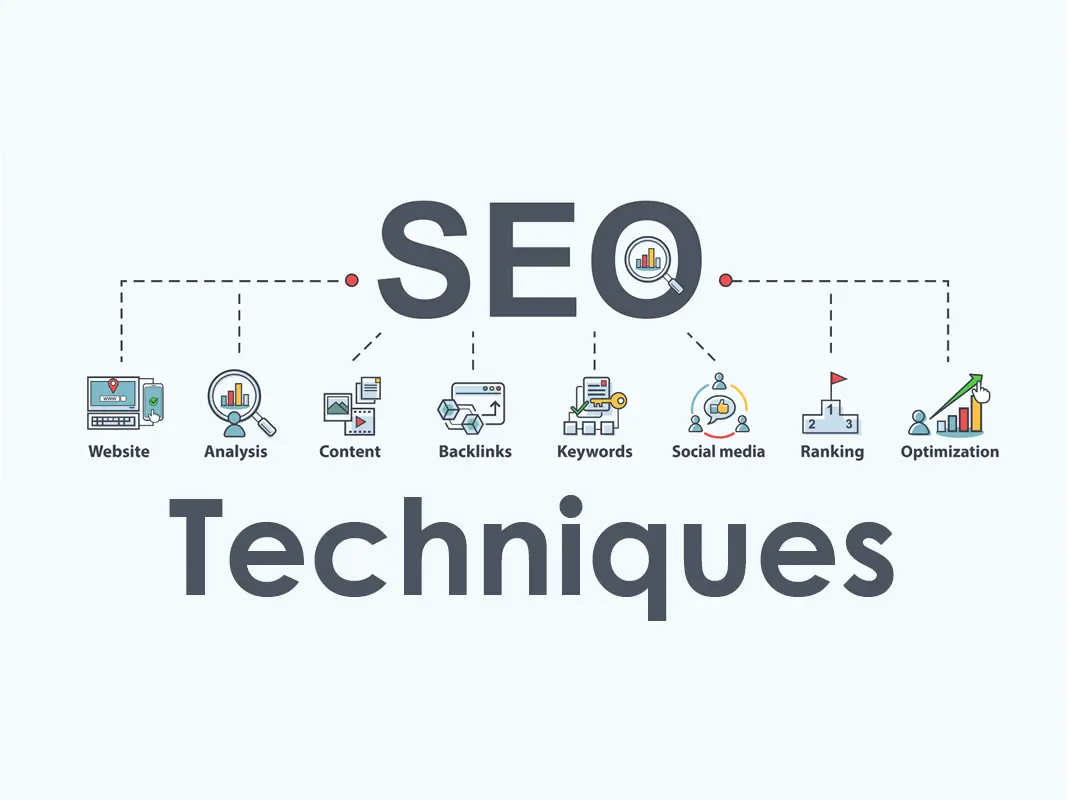
Search Engine Optimization (SEO) is the strategic process of enhancing a website’s visibility to ensure search engines can effectively crawl, categorize, and prioritize its pages. By implementing tactics such as optimizing keywords, resolving the website’s technical issues, and getting high-quality backlinks, brands can secure higher rankings and drive a consistent flow of organic traffic without paying a dime.
In recent years, SEO is more about optimizing your website with keywords that are intended towards users and not something that you find on SEMRush or Ahrefs. The importance of keywords has not disappeared, but transitioned. The fact is that these days optimizing for AI models and getting your website is more important than ranking on top of Google.
How does a Search Engine (Google) Work?
Normally, Google works in three stages:
Crawling
Crawling is the initial discovery phase where Google’s automated software, known as Googlebot, scans the internet to find new and updated content. During this process, the crawler analyzes the site’s code, content, and structure to determine what the page is about. The data is then sent back to Google’s servers to be processed for indexing, provided the site’s technical configuration.
Indexing
Indexing is the second stage, which takes place after crawling. Once the Googlebot discovers a new page, it tries to understand the content and store it in Google’s index, which is a database containing billions of web pages.
During the process, Google analyzes the video files, text, and images to evaluate the purpose and relevance. The information is then retrieved in a matter of milliseconds when a user searches for the query.
Serving Search Results
The final phase is serving the search results, where the Google algorithm retrieves the most relevant information from the index to answer the query in real time. When a user performs a search, the system analyzes the intent behind the words, taking into consideration the location, language, and current trends.
It then analyzes other signals such as page speed, mobile friendliness, and content quality. The result is a curated Search Engine Results Page (SERP) that may include links, local maps, or featured snippets.
Why SEO Matters in Today’s Digital Landscape?
SEO in today’s digital landscape is important due to the emergence of brands and businesses at a rapid rate. Now, imagine you are competing with hundreds of other brands with the intention of gaining visibility and creating brand awareness.
However, if you are not showing up in the search results against certain queries searched by users, you might lose the opportunity. To show up in the search results and compete with the rivals, SEO needs to be done strategically, which fulfills Google’s guidelines and user intent as well.
Core Components of SEO with Examples
Showing up in Google’s top position isn’t something you can do in a matter of days. It requires continuous efforts such as content updates, technical fixes, and creating links pointing towards the website. Here are some of the key SEO components with examples that help you understand the nitty-gritty of SEO.
- Technical SEO
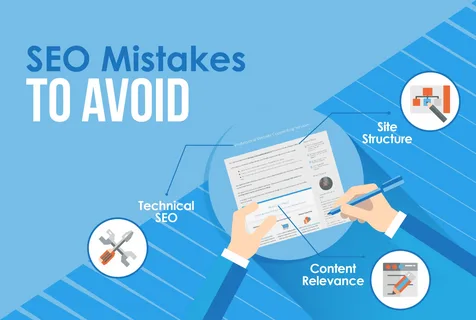
Technical SEO is the core of a website’s functionality and backend. The objective of technical SEO is to allow search engines to seamlessly and flawlessly index and crawl your website without issues. A lot of technical factors play a key role in the ranking or deranking of a website.
- Website Speed: Optimizing the images and code on the website to load under 2 seconds.
Example: Compressing large hero images on a homepage to improve Core Web Vitals.
- Mobile Responsiveness: Making sure the website offers a clean and functional look on all devices, including mobile and tablet devices
Example: Using a responsive design on the website so that every element, such as buttons, text, and images, shows clearly on mobile and tablet devices.
- Site Map & Robots.txt: Giving Google a road map of your site, such as what it is all about, its URLS, and things to index and not to index.
Example: Using an XML Sitemap to tell Google which new blog posts need to be indexed
2. On-Page SEO
On-page SEO involves optimizing the content and HTML source code of each page to rank for a specific keyword. Some of the important elements of on-page SEO, with an example, include:
- Title Tags & Meta Descriptions: Writing keyword-optimized and clickable titles along with summaries to tell what the page is all about
Example: Best Laptop for Graphic Designers under $1,000
- Header Tags: Using H1, H2, and H3 tags to structure content.
Example: Using an H1 tag for the main title and H2 tag for the sub-benefits, and h3 to further split it down.
- Keyword Optimization: Naturally placing relevant terms where they make sense in the blog, service pages, and about us.
Example: Including the long tail keywords in blogs and service pages wherever possible, without over-optimizing, such as the best digital marketing agency in the USA
3. Off-Page SEO
It refers to the actions taken outside of your own website to improve the ranking. A lot of off-page SEO revolves around making backlinks on relevant websites.
- Backlink Building: Getting relevant and high-quality links from authority websites to pass the juice to your website.
Example: A popular tech blog linking to your website as a source for a statistics report you published.
- Local SEO & Citations: Managing your presence on directories and maps.
Example: Optimizing a Google Business Profile so your shop appears in the “Map Pack” for local searches.
- Social Signals: Brand mentions and shares across social platforms.
Example: An industry influencer sharing your latest guide on LinkedIn, driving traffic and brand awareness.
Content Strategy
Content is the king when it comes to SEO and digital marketing. Without high-quality content, SEO isn’t going to work at all. Here are some of the key components of content strategy, along with examples.
- Search Intent: Creating content that actually answers what the user is looking for.
Example: Writing an in-depth guide for someone searching “what are SEO services” rather than just pitching about how much you charge for the SEO services as a digital marketing agency.
- Topical Authority: Writing deeply about a subject to prove you are an expert.
Example: Creating a Topic Cluster where one main pillar page links to other detailed sub-articles about “Search Engine Optimization or Digital Marketing.”
- E-E-A-T: Demonstrating Experience, Expertise, Authoritativeness, and Trustworthiness.
Example: Having an article about SEO written by an expert who has been working in the field for several years.
Importance of Seo in Digital Marketing
SEO in digital marketing plays a pivotal role in making or breaking a website. The core of SEO lies in how well the plan is executed in relation to Google’s updates and core guidelines. SEO, over the years, has evolved drastically due to the evolution of AI.
In this section, we are going to talk about the importance of SEO in digital marketing and how it benefits small businesses. Here’s what you need to know.
Make Your Brand Visible
The core purpose of SEO is to increase the visibility of your website. As long as your website is sitting on the second or third page of Google, your prospects of reaching the target audience is bare minimum.
However, a good SEO strategy can help you place higher on Google, which leads to more visibility and clicks from visitors. SEO isn’t a one-time process, but requires continuous efforts to help you gain the top position on SERP.
Helps Boost Traffic
Traffic is the number of people who visit your website. But they are not just random visitors. Some of them are in the early stage of the funnel and are learning more about the product or service. While others might be at the point of converting into a customer.
However, it is not possible if your website is buried under 2nd page of Google. The only way to boost your traffic is by ranking your keywords in the top positions. If you manage to rank on top, the possibilities of capturing leads and converting them into customers increase.
Authority in the Niche
The authority of any website is the most important aspect for any user to accept or reject it. For instance, a popular website like Forbes, when it publishes a list of top 50 influencers in 2026, people would trust it more than any other blog that is written by some Tom, Dick, or Harry.
Building an authority requires a website to follow the E-E-A-T principle (Experience, Expertise, Authoritativeness, Trustworthiness) as given by Google. The most important factor in fulfilling the E-E-A-T principle is the quality of content and its coverage. The better the coverage and the higher the quality, the better the chances of creating authority for the website.
Helps in Improving User Experience
SEO isn’t about just ranking your website on top. However, it is just more than that and you won’t believe many marketers don’t pay attention to it. A website well SEO optimized offers a smooth experience to the user, whatever device they access from.
Moreover, the loading time is optimal, which means users don’t have to wait for ages for the website to load. Last but not least, it also helps a user to navigate a website without any trouble by defining the right silo structure.
Offers Quantifiable Results
The importance of SEO in digital marketing is that it provides clear data about the performance and results. Without doing any random things, SEO metrics give a clear pathway to businesses on what to improve, what’s working, and what to do in the future.
For instance, Google Analytics and Search Console allow you to monitor click-through rates, bounce rates, and keyword rankings. Moreover, you can also track the pages that are not being indexed, core web vitals, and other fixes that could help in improving SEO.
Role of AI in Modern SEO
AI has transitioned from a helpful tool to the basics of search results. The focus is no longer just on ranking a website link, but to make sure that the website is being cited by the AI tools like Gemini, Claude, and ChatGPT.
The Zero-Click Era
“Studies show an average organic CTR drop of 34.5% to 61% for queries featuring AIO.
Over 65% of searches are now answered directly on the search page by AI. To get traffic, you must provide insights, personal case studies, and expert opinions that the AI summary can’t fully replace.
Search Intent over Keywords:
AI now uses Natural Language Processing (NLP) to understand why someone is searching. Instead of just focusing on primary and secondary keywords, such as best running shoes,” AI understands complex needs like breathable marathon shoes for high arches. Content must now focus on Topical Authority rather than just repeating keywords.
Agentic SEO
We are seeing the rise of AI Agents that perform tasks for users (like booking a flight or researching a product). To be found by these agents, your site needs perfect Structured Data (Schema) and machine-readable technical health.
Human Experience and Reviews
As the web becomes flooded with generic AI-generated text, Google is prioritizing human experience. Verified author bios, first-hand reviews, and original data are the most important ranking factors in 2026 and beyond.
Differences between AI SEO and Traditional SEO
Here is a clear comparison of how the SEO landscape has shifted from traditional methods to the AI-driven environment.
Traditional SEO Vs AI SEO
| Feature | Traditional SEO | AI SEO |
| Primary Goal | Ranking in the Top 10 SERP | Becoming the primary citation in AI summaries (GEO). |
| Keyword Strategy | Matching specific, high-volume search terms. | Solving for Semantic Intent and complex, conversational queries. |
| Content Approach | Length and keyword density (often “SEO-first” writing). | E-E-A-T focused: Highlighting first-hand human experience and original data. |
| Search Results | Users scroll through a list of websites. | Zero-Click: Users get direct answers from AI Overviews on the search page. |
| Technical Focus | XML sitemaps and basic site structure. | Structured Data (Schema): Making content machine-readable for AI agents. |
| Success Metric | Click-Through Rate (CTR) and Pageviews. | Brand Authority: Frequency of mentions and citations by LLMs. |
Common SEO Myths and Misconceptions
We have been hearing that SEO is dying since Google’s update, Panda. Up till now, no deaths have been reported by marketers in 2026. The myths and misconceptions around SEO are plenty. Some of them are developed over time, while others are just assumptions. Let’s take a look at common myths and misconceptions around SEO.
SEO is Done Only One Time
SEO is an ongoing process, not a set it and forget it. Competitors are constantly creating new content, new players are emerging, and search engine algorithms are evolving. Maintaining your ranking requires consistent effort and adaptation.
SEO is Difficult
SEO is not difficult. It has become easier with the emergence of new tools. Most website platforms (like WordPress) offer plugins that handle technical tasks like sitemaps and schema through simple forms and buttons.
Bounce Rate Influences Rankings
There is a common misconception that Google uses Google Analytics bounce rates to determine rank. However, Google representatives have clarified that this is not a direct ranking factor. While a high bounce rate might indicate a poor user experience, it isn’t a metric the algorithm uses to score your site’s authority.
All Links are Equal
In link-building, a single backlink from a reputable, relevant site in your industry is worth much more than dozens of links from low-quality or spammy directories, which can actually damage your reputation with search engines.
Meta Tags are of No Use
Your page titles and meta descriptions are important. They act as organic ad copy, helping search engines categorize your content while simultaneously persuading users to click on your link over a competitor’s.
Updates Force You to Restart
Major algorithm changes are designed to reward quality, not to punish sites arbitrarily. Instead of starting over after an update, focus on refining the value and user experience of your content. Google’s goal is simply to sort the most helpful information to the top.
Traffic is the Ultimate Metric
High traffic numbers are meaningless if the visitors aren’t interested in your services. It is better to have 100 visitors who are likely to convert than 1,000 visitors who are just browsing for unrelated information. Focus on attracting your specific target audience.
Longer Articles Always Rank Better
There is no hard and fast rule for what word count is best for ranking. While comprehensive articles often happen to be long, Google prioritizes quality and relevance. A concise, well-organized article that answers a user’s question directly is more valuable than a 1500-word post filled with fluff.
Summing Up
SEO is all about continuous efforts and experimenting with different techniques, keeping in view Google’s guidelines and updates. Content plays a pivotal role in helping your website to gain authority in the niche and helps in attracting backlinks from high authority websites. The focus, whether it be about content or creating backlinks, should be on quality instead of quantity.
Don’t Let Your Competitors Outrank You
Feeling overwhelmed with the amount of work you have to do to outrank your competitors.
But don’t know where to start and how to plan and strategize an SEO campaign.
Phoenix Coderex LLC, a digital marketing and SEO agency, offers everything you need under one roof.
From fixing SEO issues to creating quality content and taking care of the website’s technical problems to implementing the latest methodologies, we are here to help you stay above and top of competitors.
No false claims, no instant ranking promises – just result-driven strategies that help your website improve gradually.
Just give us a call at +1 (512) 387 7675 or email us at support@mail.phoenixcoderexllc.com

We drive targeted traffic and conversions using data-driven digital marketing strategies.
Improve your website visibility, rank higher on search engines, and attract qualified traffic with proven SEO strategies focused on long term growth.