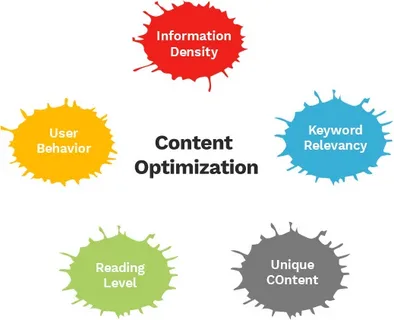
Content is the king, and without quality content and proper optimization, your chances of ranking are zero. When it comes to content optimization, the process refers to writing, structuring, and placing keywords naturally.
Content that is written for readers instead of the search engines is likely to rank higher. Overstuffing the content with keywords without sense is going to be deranked once Google goes through it.
Some of the core components of content optimization include:
Keyword Adjustment: Using the right keywords and phrases that match user intent and provide value to the readers.
Technical Adjustments: It includes everything from optimizing titles, images, URLs, and meta descriptions.
Seamless User Experience: Content shouldn’t look cluttered and difficult to read. It should be readable, have clear formatting, be mobile responsive, and fast loading.
Relevance & authority: The content should be trustworthy, frequently updated, and provide information that satisfies user intent.
After having an introduction to the content optimization, let’s take a deep dive into it.
What Search Engines Look for?
Search engines are always looking for content that is high-quality, relevant, and trustworthy. The priority is given to the pages that offer clear answers and user intent, uses keywords naturally, and deliver expertise and authoritativeness.
Technical SEO factors like indexing, mobile responsiveness, and secure connection are also pivotal for content to rank. In addition, search engines also evaluate user experience such as its navigatability, stability, and readability. Moreover, the context, location, and device type are also helpful in delivering the answers to the search engines about content’s ability to rank.
Importance of User Intent in Content Optimziation
User intent is one of the key factors in content optimization because it is how search engine will deliver the result to the searcher. The search engines are programmed to show results that matches the intent, whether it be for informational purpose, trasanctional, or navigational. If the content is not synced with user’s intent, the content won’t rank even if it includes keywords.
When optimizing content, it is vital to have a clear intent in mind. Over the years with the AI revolution the intent is more important than the word count, keyword placement, and frequenfcy of keywords.
Google for instance has set a benchmark for writers to produce content that delivers E-E-A-T (Experience, Expertise, Authority, and Trsutworthiness). For instance, a blog giving information on how to fix Windows 11 blue screen error shouldn’t expect to get ranked if the writer is trying to sell Window 11 operating system or similar entity.
Similarly a user who has clicked on the website offering detailed review on HP Spectra X360 should also place call to action apart from giving just information. The purpose should be clear from start until the end.
Difference Between Content Optimization and SEO
Content optimization focuses on making content engaging, readable, and valuable for readers. Whereas SEO is a includes everything from content to backlinking and optimization of the website that ensures it is technically sound, crawlable, and ranks well in search engines. SEO gets people to your website, content optimization keeps them there.
To understand it more clearly, here is table to help you describe.
|
Aspect |
Content Optimization |
SEO |
|
Primary Goal |
Improve user experience and engagement |
Improve visibility and ranking in search engines |
|
Focus |
Quality, relevance, readability, and structure of content |
Technical health, authority, and discoverability of the website |
|
Techniques |
– Keyword integration – Clear headings & structure – Readability (Flesch score, scannability) – Multimedia (images, videos) – Semantic coverage |
– Technical SEO (site speed, mobile-friendliness, crawlability) – On-page SEO (title tags, meta descriptions) – Off-page SEO (backlinks, domain authority) |
|
Measurement of Success |
Engagement metrics: time on page, bounce rate, conversions |
Ranking position, organic traffic, crawl/index status |
|
Time Frame for Results |
Medium-term (improving engagement over weeks/months) |
Long-term (building authority and rankings over months/years) |
|
User vs Search Engine |
Primarily human-focused |
Primarily search engine-focused (but indirectly benefits users) |
How to Optimize Content for SEO?
After taking a time to explain content optimization, it’s time to reveal how to optimize it. Let’s see how to optimize content in a way that helps you rank your keywords.
Keyword Research
The algorithms are getting more complex than ever before. In the past, the content with higher number of keywords used to rank higher on top positions. However, with the passage of time, things changed and now the content is more about context and relevance, and less about keywords.
However, when writing a web copy, a blog, or any other content, it is important to do the keyword research rightly. Don’t pick random keywords, instead use keywords that are more relevant and fulfill the reader’s intent.
When doing so, make sure to add related keywords, queries, and other keywords that are important for users.
Content Structure
When it comes to content optimization for SEO, the key role is in structuring your page content. For instance, distribute your content in a such a way that is skimmable and easy to go through. Use headers, bullet points, numbered lists, and spacing to make it readable and helpful for readers.
Content Quality
Content quality is determined by how readers find it useful, valuable, and shareable. For instance, if you have written a content to please search engines by overstuffing keywords, your content is considered a spam instead of quality.
The quality of content should be such that it fulfills the readers’ purpose and address their pain points. In the recent years, Google appreaciates content that covers all the aspects such as related topics and all that the users might ask.
Internal and External Links
When optimizing content, make sure to do internal and external linking. Internal linking is to help readers navigate different pages and posts that would help them in exploring more. Whereas, external linking is about making relevant links on similar websites with authority and traffic. The purpose is to extract juice from the already established website that have authority.
Summing Up
Content optimization is about the perfect balance between search visibility and user satisfaction. It makes sure that your content is not only discoverable by search engines but also meaningful, engaging, and persuasive for readers.
By putting in relevant keywords, structuring information clearly, enhancing readability, and supporting ideas with visuals and credible links, you create content that resonates with audiences while meeting SEO standards.
In addition, optimization is an ongoing process, which means regular updates, performance tracking, and refinements need to be done to add value and updated information. Ultimately, well-optimized content builds trust, drives traffic, and converts visitors into loyal customers, making it a pillar of any successful digital strategy.
Get SEO Optimized Content for Your Website Now
If you want your website to rank higher, attract more visitors, and convert them into loyal customers, the key is SEO-optimized content. Well optimziaed and crafted content not only engages your audience but also give signals to search engines that your website is relevant, authoritative, and valuable enough to rank. By using the keyword strategy, readability, structure, and technical SEO elements, you can transform your website into a powerful growth engine.
If you are not sure how to optimize your content to rank higher on Google, contact Phoenix Coderex, a Custom Web Development and Marketing Agency.
We help small businesses, emerging brands, and startups with an affordable solution that helps them keep their websites top notch and competitive. Get in touch now and make your digital presence felt without breaking the bank.

We drive targeted traffic and conversions using data-driven digital marketing strategies.
We design scalable, user-focused websites aligned with your business goals and growth.
We build fast, secure, and fully customized web solutions tailored to your needs.
Develop fast, secure, and fully customizable WordPress websites that align with your brand and deliver a seamless experience across all devices.